29 October 2017

Camp Teaching in Chengdu, Part 2 of 3 . . .


I just got home from running at the park near my apartment in Tallahassee. During said run, I face-planted hard . . . I smashed my glasses--the left lens popped out and landed about 3 feet away from me, along with my phone. I scraped up the left side of my body. And, once I stood up, I noticed about 1/4 inch layer of dirt all over my face, neck, legs, and clothes. I don't know what happened. I guess I hit a root that was popping up out of the ground. One moment I was running and listening to Beyonce, the next moment I was on the ground. It was like the slo-mo setting on the iPhone camera: starts out regular speed, moves into slow-mo as I fly into the air and double-bounce on the ground, then goes back to regular speed. I feel like the sound of my fall ricocheted throughout the park when I hit the ground. It was the fall heard round the world. So no better time than now to blog about my second week of summer teaching in China!


My second week in China was when things started to happen that were removed a bit from me specifically. Our electricity went out in the apartment, twice. The wifi stopped working. And, it rained a lot! I don't have any pictures of this, but just imagine me at 5am, standing in the rain holding an umbrella and my phone, checking wifi on the street corner next to an unopened coffee shop.

As I mentioned in my previous post, I stayed in a wonderful part of Chengdu--very similar to a neighborhood in New York City. So it was curious to me that suddenly the electricity went out and the wifi stopped working. Below is a street just one over from where I stayed. Look at all of the scooters!


One of my favorite parts about China are all of the people selling things off the backs of small trucks or motorbikes. You can literally sell anything off the back of a bike! This sort of mobile selling community is fascinating to me. We have food trucks in the States and people that set up tables to sell things, but you don't see a lot of people selling things from motorbikes. There is something different that happens when selling off the back of a bike--it feels more spontaneous and self-containing. I always thought it would be interesting to build an art bike and travel around with supplies and teach pop-up classes on street corners. Perhaps in the next phase of my life. Just look how gorgeous the flowers are below! Even now, I am completely smitten!


Let's talk about this beer purchase for a bit . . . I decided to mosey into the liquor store that was next door to my house. And, I noticed that the beer prices were abnormally low! And if you show them a local phone number, you get an additional discount. I got the above lot for $30 USD. Some of those beers shown above sell for $10 each in the States. So to get this whole lot for $30 was pretty exciting! Random, I know.


During our second week of camp, the school took us out for fun. They took my roommate out to a bar and then a nightclub. They took me to a restaurant. While I could easily say this might have been a bit ageist, it wasn't. I was expected to go to both outings, but only chose to attend the restaurant one. And, you can see above, the fancy attire that I decided to wear to said establishment. (Flip-flops, hat, dress, pants, and no make-up. #ftw)

I found it hilarious when we were catching a cab to head to the restaurant. We were standing in the middle of the street, cars on all sides of us, traffic as far as the eye could see. Nine of us looking for a driver. It was crazy!


When we got to the restaurant, we all ordered beers plus one giant Keg-like thing that was delivered to the table. Budweiser. No complaints here! It was cold and tasty. There was a fan blowing on us from the next table over. So the beer and the fan worked together to keep us relatively cool. 

I can't remember if the little containers were oil or some other kind of additive, but I remember we used them all to start the pot off. It was kind of like fondue. We all filed downstairs to get a tray filled with raw meats and veggies. If you look at the image of the full restaurant above, you can see on the upper left corner all of the meats and veggies offered. Just in front of the meats and veggies was a spice bar. I went to town on the spice bar. In one bowl, you mix up all of the spices you gather and then once the veggies are cooked, you dip them into the spice bowl. It was yummy!! Quail eggs are the best when cooked like this!


My walks during the second week intensified. I only had 4 students in my classes, so my prep time was lessened. I continued with my 2 hour walks during lunch and even stopped in for a massage on one of the days. Actually that massage was one of the best massages I have ever had. I thought I would get the chance to go back to my masseuse, but my time ran out. 


Above is a picture of what ended up being my lunch more times than not: green tea biscuits, white rice, and a coke. I loved that I could run next door to a convenient store and buy rice! I want this now--so easy, just add soy sauce or chicken! My breakfasts were usually coffee buns. Nothing unusual, just a coffee crusted bun that originated from a bakery in Bukit Mertajam, and now is sold all over Asia. I ate them in Singapore all the time, too . . . Perfect with coffee or bubble tea.


Because of the small class size this week, we were able to accomplish a lot of really fun projects. We continued with our drawing exercises led by Mr. Rob of Arts for Kids Hub--I'm telling you: these videos helped so much with arts-based terminology and language lessons--and focused all of the meat of our lessons on community. 


I am posting the action plans that I completed during this week's camp, below. I'm doing this because I think it gives a glimpse into my planning process. And it also shows the freedom I give my students when I am working with them. What I have listed as "purpose" is the general idea that I try to keep in mind each day as we go through our art making experience together. Additionally, this was the first time that I included a social studies planning component into my classes (even though most of my lessons usually have some sort of social drive to them anyhow). 

You will notice that I don't give too much information in my plans. I feel like this allows for change and development in each day's activities. And allows for student input, like if they are feeling like one project speaks to them more than another project does. This also doesn't tie me down to a specific outcome in case the class goes in a new and different direction.

Monday – What is Community
Social Studies – Place as a Mirror of Self
Art Project – Collaborative Weaving Hut


Purpose: Defining community creates a strong foundation for individual, cultural, and societal growth.

Materials: Fabric scraps, classroom set of scissors, old maps for collaging, old magazines for collaging, white paper (18 inches x 24 inches), classroom set of black Sharpies, India ink, liquid watercolors, classroom set of colored pencils, manual pencil sharpeners for each student, construction paper.

Introductory Activities
  • Facilitate a discussion about memory and place 
  • Show videos from Beijing Project 
  • Demo a small weaving project and discuss possible techniques 
  • Show the video of the book Same, Same But Different 

1. Share answers on Special Places worksheet in small groups.
2. Create map collages of personal geographic places of importance (home, school, extra curricular, family, etc.).
3. Choose a space together for the collaborative weaving hut.
4. Begin weaving by tying strips of reclaimed fabric to various points and watch as the project grows and changes.


Tuesday – Elements of Community

Social Studies – Scouting Out the Elements of Community
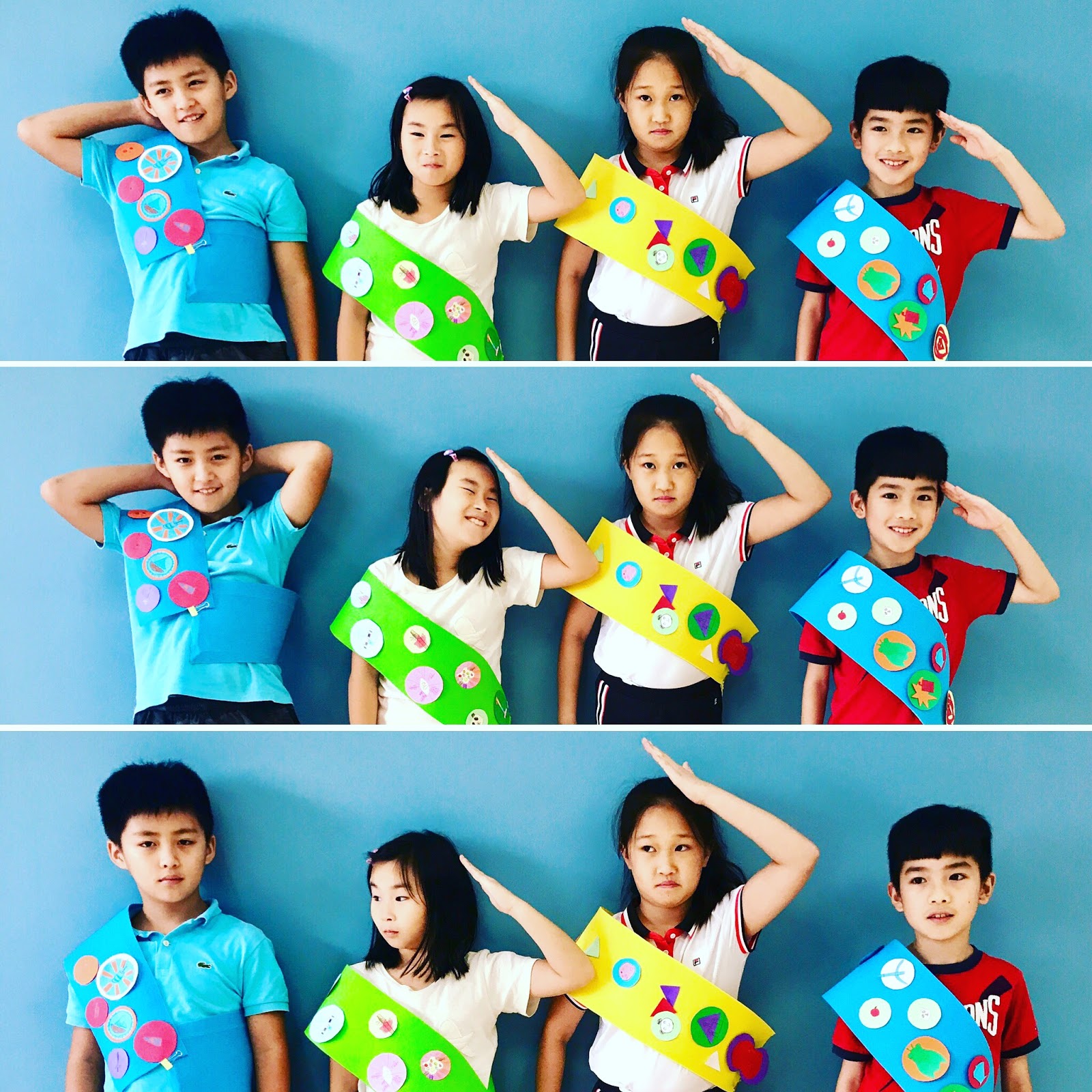
Art Project – Felt Sashes with Community Patches


Purpose: Learning about the distinct elements that make up a community helps students understand collective variation.

Materials: White paper (18 inches x 24 inches), classroom set of black Sharpies, India ink, liquid watercolors, one bolt of green felt, classroom set of colored pencils, manual pencil sharpeners for each student, construction paper, one map of Chengdu (not for cutting), map pins.

Introductory Activities
  • Take a walk around the neighborhood and take notice of the different elements that make up the community. 
  • In small groups, discuss parts of Chengdu that make it a special city. 

1. Design patches for different elements of your community (family, school, grandparents, church, temple, etc.)
2. Sew patches onto felt sash.
3. Discuss community: what do they need, how can you contribute, what do you think makes a community successful?
4. Map out different areas in Chengdu that indicate important community hubs.


Wednesday – Community Helpers

Social Studies – Activist Heroes
Art Project - Superheroes


Purpose: People hold different roles in communities that help them grow and flourish.

Materials: White paper (18 inches x 24 inches), classroom set of black Sharpies, India ink, liquid watercolors, one bolt of blue felt, classroom set of colored pencils, yarn, string, manual pencil sharpeners for each student, construction paper.

Introductory Activities

  • Discuss the variety of roles that people engage in throughout the community. 
  • What is your role? How will you take part in your community? 
  • What does a community hero look like? Who are your heroes? 

1. In small groups, create a zine that tells the story of a hero in your community.
2. Swap zines with other groups to learn about their stories.
3. Draw a self-portrait of you as a superhero in your community.
4. Present superhero self-portrait to class and hang up for all to see.


Thursday - Contributions

Social Studies – Community Road Trip
Art Project – Clay Explorers


Purpose: Being an active participant in a community inspires students to think about how they might contribute to collaboration, organization, and service.

Materials: White paper (18 inches x 24 inches), air-dry clay, classroom set of colored pencils, classroom set of crayons, pencils, classroom set of Sharpies, manual pencil sharpeners for each student, a variety of paint colors.

Introductory Activities

  • Using the information we gathered from our neighborhood walk on the previous day, the students will begin to map out the community directly around Max/Ivy. 
  • Watch community explorer video 

1. Draw out a map of the area directly around our school.
2. Add all of the community details that we took notice of on our walk (people, places, and things).
3. Design an “explorer vehicle” on paper that can help you to navigate our community.
4. Create your “explorer vehicle” out of clay and paint it.
5. Once dry, play with your explorer vehicle on our hand drawn map, navigating the community.


Friday – Community Rules
Social Studies – Law of the Land
Art Project –Mural Painting


Purpose: Understanding community laws helps students to recognize the important role of rules in a communal environment.

Materials: Masonite board in 3 equal sizes (5 feet x 4 feet), pencils, classroom set of Sharpies, manual pencil sharpeners for each student, a variety of paint colors, India ink.

Introductory Activities
  • Decide on the rules and community laws that we follow in our classroom and how they relate to the rules and laws followed in Chengdu. 
  • Look at a slideshow of murals created in and around Chengdu. 
  • In small groups, discuss ideas for a small mural and how it can relate to following the laws of our land. 

1. Illustrate community rules followed by citizens in Chengdu.
2. Discuss our illustrations and how these community rules help guide citizens.
3. Enlarge and combine illustrations to create a composition on our mural boards.
4. Paint mural and hang up in classroom for fellow teachers, students and parents to see.
5. Reflect on the week’s activities.


Our weekend journey took us two hours outside of the city to an irrigation system, which was a massive park with beautiful scenery and a huge temple. From the Travel China Guide website"Dujiangyan Irrigation System is honored as the 'Treasure of Sichuan', which still plays a crucial role in draining off floodwater, irrigating farms and providing water resources for more than 50 cities in the province.

In China, Chengdu is always praised as the Tian Fu Zhi Guo, which means 'Nature's Storehouse'. Over 2,200 years ago, the city was threatened by the frequent floods caused by flooding of the Minjiang River (a tributary of the Yangtze River). Li Bing, a local official of Sichuan Province at that time, together with his son, decided to construct an irrigation system on the Minjiang River to prevent flooding. After a lengthy study and a lot of hard work by the local people, the great Dujiangyan Irrigation System was completed. Since then, the Chengdu Plain has been free of flooding and the people have been living peacefully and affluently."


This was a really fun place to visit. There were lots and lots of people, lots of shopping, eateries, and hiking. It was touristy in spots, with people dressing up like monkey gods and pandas and then hoping you will pay them to take a picture with them. I just snapped a picture of them as I was walking past. The monkey god is known to be a trickster character full of pranks. You can read more about him here. I love, love, love these monkey god costumes! 


A cream bun sold on the side of the street! So yummy! But I was hoping that it would be filled with minced pork--those are said to be the best. But I never found them! Check out The Food Ranger for more fun food from Chengdu . . . 


This was a fascinating find. A completely Muslim restaurant, right on the corner. A very small percentage of Chinese people are Muslim, so I was excited to see this. It was funny, we found them because I recognized some of the things they were saying on the loud speaker. 


All things panda!!


The weird things that make my legs wobbly as I get older . . . Walking on a very crowded extension bridge over rushing water. It was literally bouncing up and down as we got to the center of it. I was sure the whole thing would snap and that would be the end of us. 


The views from one of the highest points of the temple were remarkable. I mean you could see forever! We were lucky to be there on a day with no rain. It is probably freezing cold there now . . . Chengdu is about in the same latitude spot as Chicago in the United States. So the temperatures are roughly the same. 

On this day, I think I walked about 38,000 steps. We walked up and down steps, over bridges, up and down hills, all over!


It has been very difficult to keep up my posting as a twice monthly affair during this first semester of my doctoral program . . . But I am doing my best! I enjoy putting these posts together and wish that more time was available! Soon, soon! Thank you so much for your patience and reading all the things. 

In the coming weeks, I will be featuring two interviews with fellow teachers and artists, my last week of teaching in China, and what the heck I'm doing in Tallahassee! Stay tuned folks! It's going to be exciting! XO

24 September 2017

Stobie Poles with Adelaide Matt!


A Stobie pole is a slab of concrete sandwiched by steel joists to lift up power lines and cables in South Australia. They were invented in 1924 by James Cyril Stobie, an engineer at the Adelaide Electric Supply Company. Much like telephone poles in the United States, these Stobie poles were commonplace parts of the landscape, and largely plain and obtuse. They were built using materials easy to find and termite resistant.

My new Instagram friend Matt has been photographing painted Stobie poles and artwork featuring Stobie poles, and posting these images on his IG feed @carringbush69. I found this fascination with these poles very interesting and wanted to know more . . . I felt like these poles were telling a story, perhaps even contributing to South Australian heritage that I knew nothing about.

With a bit of a twist on the usual interviews that I do with specialist teachers and art educators, I have decided to interview Adelaide Matt about these painted structures.


To start things off, the image above is from his most recent post--featuring a Stobie pole mosaic around the base of a palm tree. This is only one side of the pot. While he posted both sides of the pot, I am interested in the activity happening on this side of the pot. You can see the other side of the pot here.

I can't quite tell, but it looks to me like a person (blonde hair, blue shirt) is either admiring the art of the Stobie pole or in the process of painting it. Under Matt's post, he says, " This is the other side of the mosaic pot I featured recently. It features a portrait of @mr.bowden (he's the one in blue) from @hindmarshgreening. They are responsible for a lot of the art and greening in the inner West."

I loved that the Stobie pole art was becoming art itself, through the mosaic pot . . . So meta.

Our conversation happened over several emails and by exchanging images using Google drive and Dropbox. I've pieced it together here, organically and how it took place. The bold questions are my original questions, and the additional text is the conversation as it unfolded. Lots of candor and enthusiasm.

So without further ado, I present Adelaide Matt in his own words. *Oh, and the fabulous drawing below and on the right is by @malpal987654321. (Her IG feed is magic.) All additional images provided by @carringbush69. Enjoy!


LB: What is your name and what do you do for a living?

MJ: My name is Matt Jorgensen and I work as a horticulturist in the local government (think of the television show Parks and Rec).


LB: This is the greatest thing I’ve ever read . . . Parks and Rec is my favorite show. While I was living in Singapore, I watched the entire series over and over and over again. Does this mean that you write grants for park projects or submit contracts for beautification projects? Tell me more about horticulture work. Do you really get to do much gardening? Or is it mostly about projects, like I mentioned above . . .

MJ: I manage horticultural and conservation maintenance teams. It’s quite a diverse mix and quite a busy job. I don’t get to do much hands-on stuff at work so I have to get my fix in my home garden.


LB: Where are you from? Where are you currently located?

MJ: I grew up in a suburb called Ingle Farm on the northern side of the city of Adelaide, South Australia and I now live in West Croydon which is on the western side of the city.

LB: Adelaide had the most amazing weather while I was there! The sky was the bluest I had ever seen!


LB: When did you start taking pictures of Stobies?

MJ: I have always admired Stobie art but didn’t start taking pictures until August 2016 and then decided to start posting them on Instagram in February 2017.


LB: What kind of response have you gotten since doing this?

MJ: Overall it’s been very positive and enriched my life. I’ve never met anyone who’s opposed to Stobie art.

LB: I think I started following you because I found you through someone else--@foodbabysoul, maybe?

MJ: Yes, she is a very interesting person. We’ve had a few chats and I love what she does. I think I followed you because you commented on something of her's . . .  

LB: Have you met other people from around the world through your social media presence?

MJ: I've interacted with heaps of people from across the world, as well as my hometown of Adelaide. There’s also been a few people at work that have started following me that hadn’t seen this side of me before.


LB: Why Stobie poles?

MJ: They are everywhere, accessible, functional, and--most importantly--beautiful! I walk and ride around my neighbourhood to keep mentally and physically healthy. I always vary my routes so I keep things interesting . . . Keeping an eye on people’s gardens, home renovations, public art, and changes in the seasons. There is only so much exploring you can do, before you have walked every street and seen everything. My neighbourhood has more Stobie art than most and one day while out walking, I decided to start taking pictures to give myself another interest and encouragement to keep active. I hadn’t really used Instagram before, but it seemed like the perfect place to show other people what’s out there as well.

LB: Is painting a Stobie pole legal, or is it considered graffiti? Or is it just an acceptable thing in your community?

MJ: Painting Stobies is legal as long as you get permission from the power company and your local council. There are some restrictions around advertising, political messaging, and offensive material but most people aren’t doing it for that reason anyway. Personally I think it is a bit over regulated and they should just let it happen as it’s not hard to paint over if it offends.

LB: I know that Adelaide has an amazing fringe festival. So maybe it’s just a super creative place??! 

MJ: Adelaide is awesome. It is known as the festival state and people come from all over the world to attend our major arts and cultural festivals. We have a small population compared to a lot of other major cities so it is easy to get around and the air is clean. We have to be creative to stay competitive and that includes the arts. The best way to describe Adelaide is laid back.

*Did you know that Adelaide is Austin's sister city? Thank you to @wellbalancedwomen for this fun fact!!


LB: How important is art to your life?

MJ: I love art and in particular community-initiated art. It took me a while to realise that you don’t have to be particularly talented to get the benefits of creating art and anyone can get out there and beautify their public spaces! If people replaced television with art, the world would be a much better place.

LB: Love that last statement! I haven’t had a television in ten years!! I stream things if I feel like watching a movie or a television show. I have a MA in Community Arts, which is why I was so drawn to you documenting Stobies. Some people in my field think that all art is political. Do you consider the Stobie art as political? If so what do you think it references/what’s the statement . . . Or, is it merely beautification? Or maybe it depends on the art?

MJ: I think most of it is beautification. I wish people were allowed to be political as long as they were respectful. It’s a great medium to express a point of view.


LB: Do you consider the Stobie images your artwork or documentation or both?

MJ: I think of it as documenting other people’s art. I believe that good photography is an art. And there are some great photographers out there, but I’m not one of them. My skills and attention to detail leave a bit to be desired. I do hope the artists that know about the Instagram feed get enjoyment from the positive comments their art attracts.

LB: Have you ever spoken to the people who have painted the poles you have photographed? Do they ever reach out to you?

MJ: Some have. Not many though. I have approached some local people that I know who paint and it is always a positive interaction.

LB: Do you make artwork in addition to the images you share on IG? If so, tell us more!

MJ: Yes! I have a very active imagination and I find that if I don’t keep my mind focussed on creating things then it has a tendency to get me in trouble. I’m always in the garden so that’s where a lot of the things I create end up . . . There’s a mixture of sculptures and other interesting creations. I also love to intertwine wordplay and riddles into the garden. 

Garden design is a form of art and I think people should create gardens that express their personality, make them unique, and avoid copying your neighbour or the latest trend.

While I’m on my [gardening] soapbox, there is no reason why a front fence should be any higher than waist height. How will you get to know and look out for your neighbours, if you can’t see each other?

On top of all that I run a small art gallery on the Stobie pole in front of my property which has housed some of my art plus contributions from professional and amateur artists who live in the area.

*Below and left, is my work in Matt's Stobie pole gallery in front of his house. It was exciting to me to have work featured in Adelaide, in the community and on the street. You can see the original post about this work here.


LB: What is the process behind your IG feed?

MJ: I use a Samsung Galaxy S5 and I basically turn the camera on and take a photo. The sun can be my best friend or worst enemy, depending on the aspect of the pole. I often have to return to take pictures when it is overcast or the sun is in the right spot in the sky. I have figured out the best distance and angles so they can be cropped in Instagram effectively. I have at least 100 poles in my [photo image] gallery at any given time to choose from. I get up at 6am most days and before I do anything else I go into my gallery and choose whichever pole takes my fancy for the day. I do try to vary the styles, age, and location a bit. There are [some] really good poles and some quite basic too so I try and show all types.

LB: Do people send you recommendations for where to take pictures or do you just happen upon painted stobies randomly?

MJ: People will often send me locations to search, which I really love! And it inspires me to go exploring in places I wouldn’t normally go. Some people have also sent me pics they have taken but most of the time I post my own pictures. I’m lucky to live in an area that has more painted Stobies than most and there are some very active community groups who are always painting more: @gorilla_art_kilkenny and @croydon_paint_bank in particular. I also love finding them when I’m not looking . . . That’s a real treat.

LB: This is really interesting that there is a Stobie pole community. I am trying to think of something similar in the US--maybe electric boxes or newspaper boxes? Have you been to the US?

MJ: No, I have dreams of walking the Pacific Crest Trail at some stage and also would like to see New Orleans. 

LB: What’s your take on a similar painted fascination? I am going to link to the blogpost I sent you at the end of this post. Did you ever email the writer? Was there a response?

MJ: Yes and no response so far. All art is good. The less it is regulated, the better. Although I do understand that it is important for all levels of government to fund and support art.

LB: Show us your top 5 favorite painted stobie poles, and tell us why they're your favorite.

MJ: This is a tough one. There are so many good poles that I left off the list as my favourites change from day to day . . . 


1. Women are my favourite people, especially when they’re green! I love it when the Stobie is used to show a slither of a larger picture and this one does it as well as any I’ve seen.


2. This one is exquisite: the colour blending into the rust, the aged look!!! Best viewed when the sun is setting in the west.


3. My favourite animal of all time is the Murray Magpie and my favourite stobie Magpie so far is this one. Painted by passionate local artist and stobie pole enthusiast, @phantasmagoria_design


4. This one is by local artist @jackiereichstein_art . She is very talented and I love the backdrop.


5. Most Stobies are 90 degrees to the road but occasionally they’re parallel like this one. I love the vivid colours of this pole. The purple is divine but I also love the contrast to the street art in the background.


LB: Do you think Stobie pole art is important to your town’s cultural history? If so, why?

MJ: South Australia is famous for the Flinders Ranges, Kangaroo Island, producing world class wine . . . It’s known as the festival state and Lonely Planet recently named it the 5th best destination in the world for 2017 . . . However, they all pale in comparison to the magnificent painted Stobie pole. Stobies are unique already, and painting them adds an extra layer of quirkiness. When people come to South Australia from other Australian States or from overseas, they fall in love with the poles known as Stobies.

LB: Do you think Stobie pole art is a form of storytelling?

MJ: For sure. They are a snapshot of the lives of the people who lived near the pole and thought it was a good idea to get out and personalise it. It’s kind of like cave painting. In a hundred years time, people will look at some of the poles and they will be revered. Some show the history of the area, someone’s favourite animal, their cultural heritage or even their favourite sports team . . . One pole close to me depicts characters from the TV show South Park and I can imagine some teenage kid painting it back in the late nineties and now they show their kids when they visit their parents who still live there.


LB: What is the furthest you’ve traveled to take a picture of a pole?

MJ: The Clare Valley is about 140km north of Adelaide and it’s famous for wine. The local primary school is surrounded by painted stobie poles which have a distinct Aboriginal culture and local flora flavour.


LB: Have you ever received pictures of poles from other people? If so, what is the story?

MJ: I’ve had a couple of people send me pictures of poles or post their own pics and tag me. Lots of locals love Stobies and post as well. The pic below was sent by @catmagic._ who was visiting the lovely seaside town of Goolwa at the time. We have never met and probably won’t, but we share an interest in Stobie art and that’s one of the good things about social media.


LB: How has your world changed by documenting and taking notice of Stobie poles? I would imagine that you are keenly aware of your surroundings on a daily basis.

MJ: I’m a pretty inquisitive type anyway, but I am much more attuned to Stobie poles now than I used to be. Sometimes I might spot one down a side street and then spend the next half hour searching for more in the same location. Sometimes I will explore for an hour in a suburb and not find anything, and I walk away wondering why not?

LB: Do you hear any good stories while you are out and about taking pictures? I would think that you would meet a lot of people, or people might come up to you and ask you about what you are doing.

MJ: I get some funny looks sometimes and people will ask what I’m up to, which leads to some great conversations. Occasionally I will ask someone standing in their front yard if they know of any painted poles in their area which is a great way to meet people and learn a bit.


LB: Tell us your best story that you’ve heard while out photographing.

MJ: Local community artist Lara and her granddaughter Mia recently painted a pole together near the railway line down the road from me. I managed to get a pic of them painting together and was able to return a couple of weeks later to document the finished work. I love the fact that a family can share something like that . .. It’s almost like a totem pole. I love the fact that they can drive or walk past that pole for years to come and remember the time spent together.


LB: Do you host any large events that feature your images so that the community can see what you are doing? (Thinking art shows or something like that . . . ) If so, how was the response? What about a book of images? Anything like that in the works, or do you consider this more of a hobby?

MJ: I think just a hobby for now. My life is pretty busy already, but who knows in the future?

LB: What is your most favourite part of documenting Stobie poles?

MJ: Exploring would have to be my favourite part. I’m pretty passionate about the Stobie art but I also love older style letterboxes (see below), old garden statues, mid-century house plaques and other people’s front yards.


LB: If we asked you when you were five what you wanted to be when you grew up, what would you say?

MJ: As far back as I can remember I have always wanted to be a gardener, and it is the only type of work I have ever done . . . Hopefully it will stay that way forever. There was a brief stage where I thought about modeling, but I think that ship has sailed. George Clooney I am not.

LB: In keeping with particular questions I ask everyone that I interview, what is your favourite song right now . . .

MJ: Kalgoorlie by The Peep Tempel, a very Australian song.


LB: Last and final question . . . What is the greatest thing that has happened to you in the past week? This answer can be as simple as having the best cup of coffee to winning a million bucks. Whatever suits you.

MJ: My youngest daughter Matilda who is nearly 15 drew me a picture for Father's Day (see below). 

*Stars with glitter on them . . . This 15 year old knows what's up!!


* * *
I keep thinking about this interview, trying to compare it to things that I see happening here. I sent Matt an article that I saw on one of my favorite art blogs, Glasstire. What do you think of art happening in communities on common items? Newspaper boxes, trash receptacles, bike racks, light poles? A HUGE thank you to Matt for his participation in this interview!! Please leave questions and comments for Adelaide Matt in the comments section below.


Up next? Summer teaching in China, week number two.